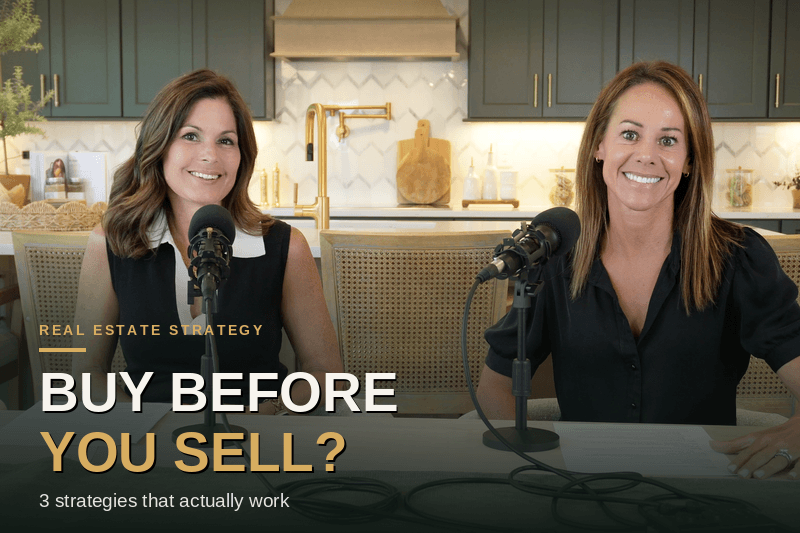
Can You Buy Before You Sell? 3 Proven Strategies
Jennifer Foster August 20, 2026
Jennifer Foster August 20, 2026
It's the question we hear more than almost any other: can I actually buy a house before I sell the one I'm living in?
The answer is yes. Absolutely yes. There are three well-worn paths to get there, and none of them require you to guess and hope. What they do require is a plan — because the difference between a smooth move and a stressful one usually comes down to strategy, not luck.
Here's how each option works, what it costs you, and how to figure out which one fits your family.
Most people selling a home right now also need to buy one. And a lot of them are sitting on an interest rate they love, which makes the whole idea of moving feel like a step backward. That hesitation is real, and it's worth naming.
But here's the other half of the picture. Roughly 65% of Americans own the home they live in, and a large share of those owners have built up serious equity — some are down to owing almost nothing on the mortgage. That equity doesn't just sit there. It can be reallocated into the next house: a bigger down payment, money toward a rate buy-down, or simply a much smaller loan on the other side.
And life doesn't wait for interest rates. Whether you're growing, downsizing, relocating, or just ready for something different, most people aren't staying in their current house forever. The question isn't really if — it's how.
This is the conservative play, and it's a good one if you're risk-averse.
When you sell first, you know exactly what you're working with. No estimates, no "we think it'll appraise around here" — you have a real number in the bank and a clear budget for the next purchase. You also get to shop without a clock running, which takes a surprising amount of pressure off.
The tradeoff is housing in between. You'll need a Plan B, and for a lot of families that means a short-term rental. It's common for people to rent for six months or even a year while they look. That's not a dealbreaker, but it belongs in the math: rent, a second move, storage, utilities, and the ongoing cost of living somewhere that isn't your next home. All of it quietly eats into the proceeds you just worked so hard to net.
Best for: buyers who want certainty above all else, and who have a comfortable, low-cost place to land in the meantime.
Now you're shopping while still living in your current home — and your offer gets a lot stronger.
The biggest advantage is that you become a non-contingent buyer. You're not asking a seller to wait on your house selling, which makes your offer far more attractive in a competitive situation. You also get to move on your own timeline: buy it, move in, get settled, and then deal with selling. No frantic weekend where the movers and the closing attorney are both waiting on you.
There's a bonus most people don't think about until they're living it: you're not trying to keep a house showing-ready while you actually live in it. Some folks handle that fine. Others find it exhausting. It's a personal call.
The cons are financial. You may be carrying two mortgages for a stretch, which means qualifying for both. For an owner with a small remaining balance, that's often less of a burden than it sounds — but it needs to be confirmed with a lender, not assumed. You'll also need to plan ahead for the down payment, because the proceeds from your current home aren't available yet. That nest egg has to come from somewhere, and figuring out where is a conversation to have before you're under contract.
Best for: buyers with equity, flexibility, and a specific house worth moving on. Fall is a particularly good moment for this — with fewer buyers competing, it's easier to get a strong deal on a home that checks every box.
This is the most advanced version, and honestly the most satisfying when it works. You sell and buy in sequence, sometimes closing on both in the same day — one closing in one hour, the next home an hour later.
It's also the most demanding. Here's the typical shape of it: you get your current home under contract first, ideally past the due diligence period, before making an offer on the next one. In North Carolina, your contract can reflect that your home is already under contract — which tells the sellers on the other side that things are genuinely moving and that you're not much of a risk. It makes your offer meaningfully more favorable.
From there it's a chain of linked events. Your buyer's lender, your buyer's agent, your lender, the sellers you're buying from, the closing attorneys — one delay anywhere ripples through everything. That's why this strategy lives and dies on the professionals involved. Everyone has to be aggressive about communication and working toward the same goal. When agents on both sides are truly coordinating, this can feel like magic. When they aren't, it feels like a fire drill.
Best for: homeowners who need the proceeds from the sale to fund the purchase and want to avoid double housing costs — and who are working with an experienced team.
If you want to buy while you still own, but the money you need is locked in your current home's equity, there are lending products built for exactly this. Bridge loans are the best-known example — you borrow against your current home, use it for the new purchase, and pay it off when the sale closes.
There are more options than most buyers realize, and they vary a lot. The right move is a conversation with a lender who works with these scenarios regularly and can lay out what's actually available to you. Real estate goals aren't cookie-cutter, and neither is the financing.
New construction is a built-in runway. If your next home is being built and you're four or five months out, that window is your selling window. Use it. You can often line the timing up so everything closes together instead of scrambling at the end.
Ask about a rent-back. If you need to sell before you buy but haven't found the right house yet — or yours isn't ready — you can negotiate a short-term lease back and stay in your home after closing. It requires both parties to agree, but it frequently works for everyone: the buyer gets the house under contract, and the seller gets breathing room. A lot of people never consider it simply because no one brought it up.
There's no universal answer. It depends on your equity, your comfort with financial risk, your timeline, and how much disruption your family can absorb. Someone with a nearly paid-off home and cash reserves has very different options than someone who needs every dollar of proceeds to make the next purchase work.
What we can tell you is that all three strategies work, and we've walked clients through every one of them. The mistake isn't picking the "wrong" strategy — it's not picking one at all, and letting a great opportunity pass because the logistics felt overwhelming.
If you're curious what your home could sell for in today's market, or you want to talk through which approach fits your situation, reach out. We'll map it out with you.
Visit www.frpremiereproperties.com or give us a call — and subscribe for more market insights.
Can I buy a house before selling my current one? Yes. You can buy first and sell afterward, sell first and buy afterward, or coordinate both transactions to close around the same time. The right choice depends on your equity, your ability to qualify for two mortgages, and how much timing risk you're comfortable with.
Do I need to qualify for two mortgages to buy before I sell? If you're buying before your current home sells, lenders will generally need you to qualify carrying both loans. Homeowners with a small remaining balance often clear this more easily than they expect. A lender can confirm quickly.
What is a bridge loan? A bridge loan lets you tap the equity in your current home to fund a new purchase, then pay it off once your existing home sells. It's one of several financing products designed for buyers in this exact position.
Is it better to sell first or buy first? Selling first gives you certainty about your budget but usually means temporary housing. Buying first gives you a stronger, non-contingent offer and a calmer move, but may mean carrying two mortgages temporarily.


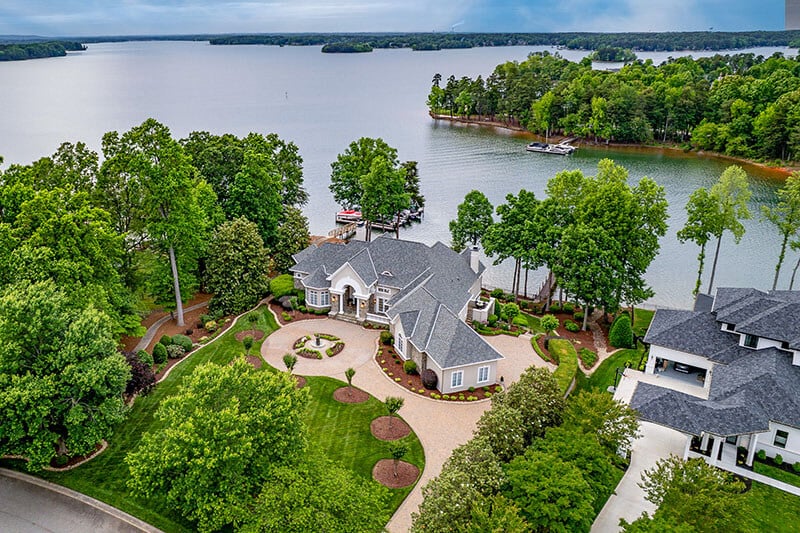

At Foster Rojahn Premier Properties, we are the leading experts in Lake Norman real estate. We offer deep insights into the local market and are dedicated to helping you achieve your real estate goals.