Custom Home Building on Lake Norman with ES Johnson Builders
Barrie Rojahn October 8, 2026
Barrie Rojahn October 8, 2026
Waterfront lots in Cornelius, Mooresville, Davidson, Huntersville and Denver aren't cheap, and building on them takes more planning than a typical suburban lot. Setbacks, county rules, slopes and shoreline all affect what you can build and what it will cost. A beautiful floor plan that doesn't fit the lot or the budget is just an expensive drawing.
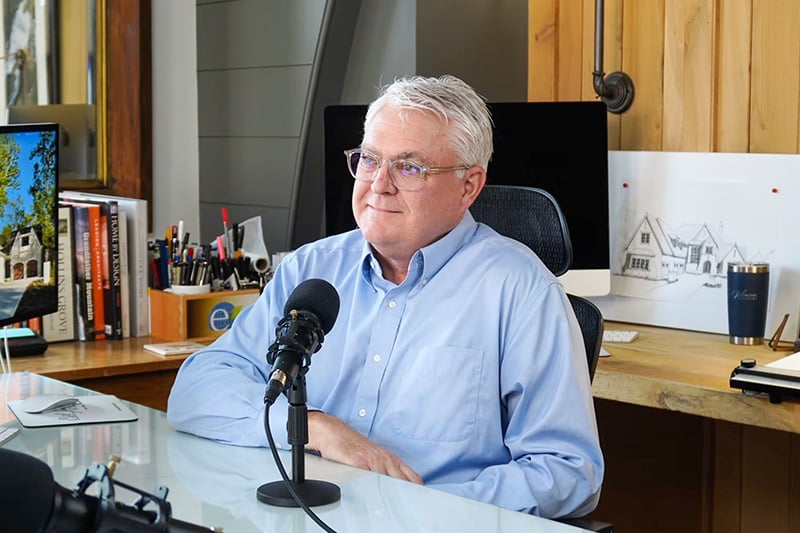
That's why we sat down with Eric Johnson of ES Johnson Builders, an award-winning builder who has spent 37 years in the business, 33 of them under his own name. What makes his firm unusual in the Lake Norman and greater Charlotte market is that it doesn't only build homes. It designs them too, along with the interiors and the landscaping, all in-house.
If you're thinking about building on or near the lake, whether you've lived here for decades or you just bought a lot after a weekend visit, Eric's process is worth understanding before you hire anyone. Here's what we learned.
The short answer is that the person drawing your house should know what it costs to build.
Eric started designing homes about 20 years ago. Part of the reason was that he enjoyed it. In meetings with outside architects and home designers, he found himself drawn to the creative side of the work and to working directly with clients.
He also kept seeing the same problem. The designers he worked with were talented and did exactly what clients asked for: the square footage, the features, all of it. But they didn't know what those things cost. A home would get fully designed, then priced, and it would come in $300,000 over budget. By then the client had already spent a lot of time and money on plans they couldn't afford to build.
So Eric changed his process. In his words, he won't design a home unless he knows it can come in at the budget the client wants, with the features they want.
For Lake Norman buyers, that matters even more. Waterfront and water-access lots already take a big share of the total budget. When there's less room left for the house, you can't afford to design first and price later.
Insider tip: Ask any builder or designer you're interviewing when pricing enters the conversation. If the answer is "once the plans are finished," expect some surprises.
Every custom home is a balance of three things, and the right answer sits somewhere in the middle.
Eric explains his approach with what he calls "the triangle": square footage, features and budget. Push one corner and the others move. If you want more square footage, you either spend more or scale back on features. If you want the chef's kitchen and the outdoor living space, the square footage or the budget has to make room.
What makes design-build useful here is that the feedback is immediate. Because Eric is pricing as he designs, clients don't wait weeks to find out what an idea costs. When someone suggests something during a design meeting, he can say, more or less, "That's a great idea. Here's about what it'll run. Are you comfortable with that?"
The feedback works in both directions. Sometimes Eric can tell a client they don't need as much as they think for what they're asking. A feature they assumed would be expensive might cost less than expected, or a smaller footprint might do everything they want.
That kind of honesty is what keeps a project moving. It's the difference between making real decisions as you go and finding out all at once at the end.
Why it matters around here: Lake homes tend to come with long wish lists, like covered porches, outdoor kitchens and big windows facing the water. The triangle helps you decide which of those matter most before they're drawn into a plan.
Before anything else, Eric needs to know what he's designing on.
When we asked Eric where he starts with a new client (lifestyle, architectural style or budget), his answer was clear: the lot. Budget and design come out naturally in good conversation, but the lot sets the starting point for everything.
That's because the lot affects cost more than most people expect. Eric's projects range from about $250 to $350 per square foot up to $1,200 per square foot, and where a home lands in that range depends partly on the land it sits on.
That's also why Eric wants to be involved before the land is even purchased. Picture a couple visiting for the weekend with three or four lots on their list and two favorites. That's when he wants a call. He'll research each lot beyond what's in the listing, because two lots that look similar can perform very differently. One might cost $100,000 more up front and still be the better value once construction costs are factored in [CONFIRM: transcript is garbled here].
Insider tip: If you're comparing lots, bring a builder into the conversation before you write an offer. Walking a few lots now will cost you far less than a redesign later. Fall is a pleasant time to do it, too, once the summer boat traffic has thinned out.
Fewer people involved means fewer things lost along the way.
When we asked Eric about the biggest advantage of design-build after budget control, he pointed to communication. In a traditional custom build, a homeowner might work with an architect, then a builder, then an interior designer, then a landscape designer, and repeat their whole vision to each one. ES Johnson Builders handles interior design and landscape design in-house, so clients share what they want once.
Eric added that many clients have trouble putting what they want into words, and his team uses specific tools to help draw that out. You only want to go through that process once. After that, as he put it, there's one person "driving the train the whole time at a steady pace rather than just stopping and starting."
Our team has seen what happens without that. One of our clients bought a lot with a dream lake house in mind. Only later did she run into county restrictions and setbacks she hadn't accounted for. To make the house fit, she had to shrink closets and give up a bedroom. If the lot, design and budget had all been handled by one team from the beginning, she likely could have avoided that and saved a good amount of money.
Eric pointed out that even clients who get good information early can forget it by the time they reach the fifth person on the project. Having one person keep the whole project on track, and offer alternatives when something doesn't fit, makes a real difference.
"Custom" gets used loosely, so it helps to know what you're actually paying for.
Eric breaks the market into three tiers:
Semi-custom: You start with set floor plans and make changes. It's a good option for buyers who want some personalization without starting from scratch.
Custom: You start from a clean slate. There's still a firm budget, and the goal is to fit all your wants and needs into it, which brings back the triangle. Selections continue into the build up to about the framing stage, so it's an ongoing collaboration rather than a one-time decision.
Luxury: There's still a budget, just a looser one. At this level, as Eric put it, "the internet is probably your catalog," and clients often visit specialty showrooms to choose finishes.
He also noted that "custom" covers a very wide range of prices. A custom home isn't defined by a price point. It's defined by the fact that the design starts with you rather than an existing plan.
Why it matters: Knowing which tier fits your goals helps you set realistic expectations and makes it easier to compare builders fairly.
The order of your first few calls can shape the whole project.
So you own a lot, or you're about to buy one, and you want a custom home. What's the first step? Eric's advice is to call your realtor first, then have your realtor call him, and to do both before you meet with an architect.
His reasoning is that realtors and builders look at land differently. If you ask a builder whether a lot is worth it, Eric admits his first thought is "I love this lot, I get to build on it." That doesn't mean it's the best value for you. A realtor helps you judge the investment. A builder helps you understand what the land will actually cost to build on. And since Eric is responsible for the finished home, involving him early means you get the right information before you're too far down the road.
Practical info: To talk with Eric about designing or building a custom home, call ES Johnson Builders at 704-987-7950.
Building a custom home on Lake Norman is one of the most rewarding projects you can take on, and it goes much more smoothly with the right team in place from the beginning. Eric's message comes down to a few points. Know your lot first. Price as you design. Keep the number of people involved small. Make your first calls before you're committed to anything.
If you're weighing lots, thinking about building, or just curious what's possible on our lake, reach out to Foster Rojahn Premier Properties. We'd be glad to help you find the right lot and connect you with the right builder.

At Foster Rojahn Premier Properties, we are the leading experts in Lake Norman real estate. We offer deep insights into the local market and are dedicated to helping you achieve your real estate goals.