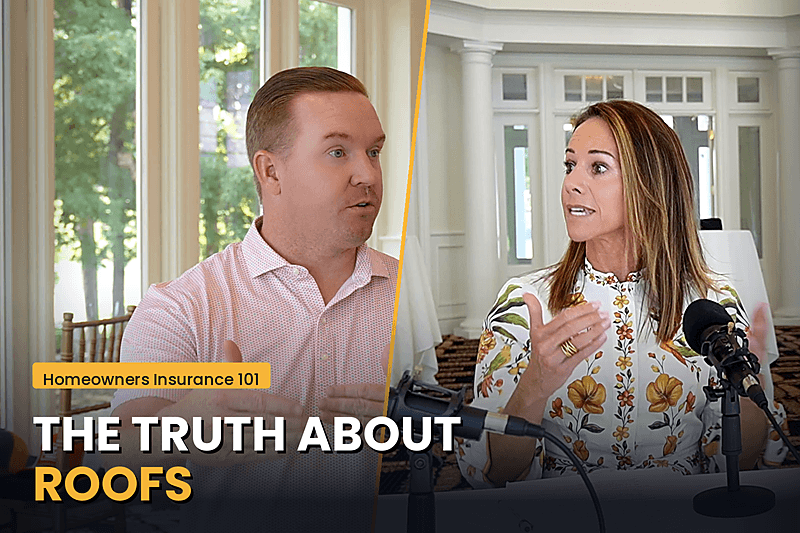
Is Your Roof Really Covered? Home Insurance with John Hassell
Barrie Rojahn September 17, 2026
Barrie Rojahn September 17, 2026
"My roof is covered." It's one of the most reassuring phrases a homeowner can say, and one of the most misunderstood. A policy can include the roof and still pay far less than a new one costs.
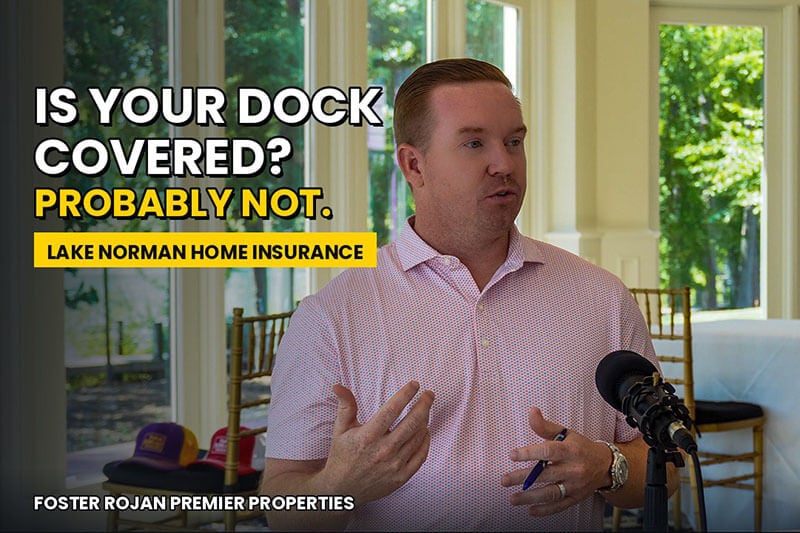
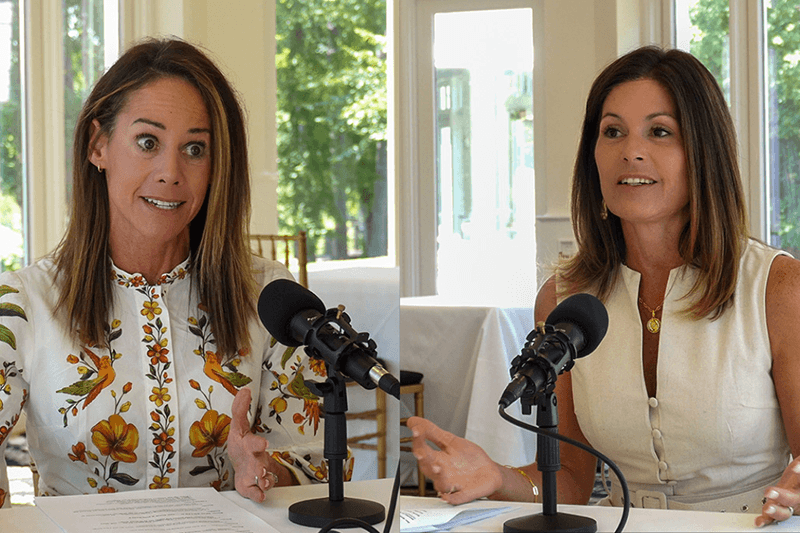
On a recent episode of the Lake Norman Pulse, Jen Foster and Barry Rojan [CONFIRM: co-host surname] of Foster Rojan Premier Properties sat down with John Hassel of North Carolina Farm Bureau Insurance to explain what roof coverage really means. John brought the kind of energy that makes an insurance conversation worth watching, which is no small feat.
This matters around here for a few reasons. John points out that Lake Norman and the surrounding area tend to be a hotbed for wind and hail storms, so roof claims are a real possibility whether you live in Cornelius, Mooresville, Denver, or anywhere in between. Jen noted that roof replacement costs have climbed sharply over the last several years. And for anyone buying or selling, roof coverage has a way of turning up at the worst possible moment: in the middle of due diligence.
Here's what John wants every Lake Norman homeowner, buyer, and seller to know.
Roof coverage comes down to two phrases, and the gap between them can be thousands of dollars.
John explains that roof coverage generally falls into one of two categories. Replacement cost means that if something happens, the carrier comes back and makes you whole. In John's words, if you have a total loss, they put a new roof on, minus your deductible. Actual cash value means the carrier pays only what your roofing materials are worth at the time of the loss.
His example makes the difference clear. Picture a 15-year-old shingle roof that has a 30-year lifespan. With replacement cost, the age doesn't matter: a covered total loss gets you a new roof, less your deductible. With actual cash value, John says, the carrier would pay only about 50% of the material cost, because the roof is halfway through its useful life.
That difference is why this matters for people who live here. A roof is one of the largest expenses a homeowner will face. Discovering after a storm that you're covering half the bill yourself is a surprise no one wants.
John also notes that in North Carolina, a carrier can't simply decline to pay replacement cost on a homeowners policy. To do so, it has to add an endorsement to the contract. That endorsement is the detail to look for, and we'll come back to it.
Every carrier sets its own age limit for replacement cost, and the limits vary more than you might expect.
John is clear that each company has its own underwriting rules. At North Carolina Farm Bureau, he says, a roof can qualify for replacement cost if it meets two conditions. First, it has to be under 20 years old. Second, the agent has to inspect it and find it in good shape, meaning no flipped-up shingles, no discoloration, and no mold or moss growing on it. At Farm Bureau, the agent does that inspection personally, which John sees as a sign of the company's trust in its agents.
He can't speak for every carrier. From what he's heard elsewhere in the market, though, some companies offer replacement cost only on roofs up to about 10 years old, or perhaps 15. Barry added that the roughly 10-year mark matches what the FRPP team has been hearing too.
John is frank about his view. Covering a roof only for the first third of its useful life seems a little crazy to him, and he believes Farm Bureau made a good call by extending coverage to roughly two-thirds of a roof's life, as long as the roof passes inspection.
Insider tip: If your roof is in good condition and under 20 years old, and someone tells you replacement cost is off the table, John's advice is to keep asking. Other carriers may see it differently.
The endorsement that limits your roof coverage may already be on your policy, and you might never have noticed it.
John regularly meets homeowners who are shopping for new coverage, often because their premium feels high. When he reviews their current policies, he often finds that the previous carrier added an actual cash value endorsement. Many of those homeowners are shocked to learn about it.
Here's the part that surprises people most. When John has to add that endorsement himself, the premium savings are small. He described a home with a 25-year-old roof in good condition. Because of its age, the policy had to carry actual cash value, and the premium difference came to about $15 a year. Savings that small won't appear on your bill in any way you'd notice, so you likely wouldn't know about the endorsement unless you read your contract closely.
His advice is simple: call your agent or your insurance company and ask, "Do I have replacement cost on my roof?" John describes it as a yes-or-no question, and it takes about as long to ask as it does to read this paragraph.
Fall is a good time to do it, before the next spring storm season (and before anyone is up on a ladder counting missing shingles).
When you suspect roof damage, the order of your phone calls matters.
John explains that once you file a claim, it goes on your claims record, even if the payout is zero and the adjuster finds no damage. So before you file anything, he recommends having a local, reputable roofing company inspect the roof. Many offer free inspections, and he suggests checking Google reviews for companies with plenty of five-star ratings. A good roofer can usually tell you whether you have wind or hail damage an insurer would likely pay for, or whether the roof is simply old and worn out.
Jen raised an important point here. If the roof is just aging, a homeowner who files first ends up with a claim on their record for nothing. It helps to know a roofer you trust who will tell you honestly whether you have a real claim.
John also cleared up a common misconception about claims and premiums. According to John, North Carolina carriers can't individually raise your homeowners premium because you filed a claim, although auto insurance works differently. Instead, home carriers consider how many claims you've had and how often, which affects your future insurability.
This creates an opportunity during a sale. Suppose a seller's roof is about 18 years old and a roofer finds storm damage. John says the seller can file under their own policy and pay only the deductible, and the buyer then gets a repaired roof that any carrier can insure.
Timing is where buyers and agents tend to worry, and John had encouraging news.
Jen described a familiar situation. A home inspector flags the roof, and the team has roughly three weeks of due diligence to sort it out. Her question: is that enough time to file a claim on the seller's policy? And if the work can't be finished by closing, is there another way?
John believes 21 days should be more than enough time to handle the claim, though he couldn't promise the repair work itself would be done in that window. As he explains it, you would file the same day the roofer confirms the damage. An adjuster is normally assigned within about 24 hours, may or may not visit the roof in person, and then the carrier decides whether it will pay.
The detail that makes this workable is that coverage depends on who held the policy when the damage happened, not when the claim is filed. If the damage came from a storm last June and the seller owned the home and the policy then, the claim belongs to the seller's policy. John says the seller could receive the payout and those funds could be applied at closing, and the buyer could then replace the roof after moving in.
There's one catch to plan for. John notes that carriers typically pay the depreciated value first and pay the remainder only after a completion certificate is issued. You may need to address that in the purchase contract, or push to get the work done quickly.
As Barry put it, this is an all-hands-on-deck conversation that should include the listing agent, the buyer's agent, and the insurance agent.
A roof is more than shingles overhead. It's often the difference between a smooth closing and a stressful one. John's advice for Lake Norman homeowners comes down to three steps. Confirm whether your policy provides replacement cost. Call a roofer before you call your insurer. And if you're buying a home with an older roof, ask questions early rather than on day 20 of due diligence.


At Foster Rojahn Premier Properties, we are the leading experts in Lake Norman real estate. We offer deep insights into the local market and are dedicated to helping you achieve your real estate goals.